History

It’s a common view that Asturias is the only place in the country that is the ‘true’ Spain. To explain, it was the only region that was never conquered by the Moors. Due to it’s location between the sea and the mountains, Asturias became a relatively safe area. It provided a perfect base for Christians, royalty and dignitaries. This led to a defining moment in Spanish history.
In 722 at the Battle of Covadonga, King Pelayo and his men defeated a Moorish attack. This successful battle proved to be a catalyst across other areas of Spain. It gave a new confidence to reconquest land and repel the Islamic invasion. This process however, would take a further 700 years. Covadonga is just over 10km from Pulieru and houses an impressive Basilica. Its historical importance, means that today, it is the second most visited pilgrimage site in Spain, after Santiago de Compostela.
Religious pre-Romanesque architecture helped maintain the Christian culture. Most notably the San Salvador Cathedral in Oviedo . There are also two Unesco World Heritage sites – Santa Maria Del Naranco and San Miguel de Lillo.
Going further back in time, in fact over 150 million years, dinosaurs roamed the region. To demonstrate, today you can see dinosaur tracks left in the mud and sand,. They are located on the coastline between Ribadasella and Lastres. It’s worth combining a visit to see the footprints, with a visit to the Jurassic Museum near Colunga.
The first humans in the area used caves as their shelter. It’s possible to appreciate Palaeolithic art in caves such as Tito Bustillo in Ribadasella.
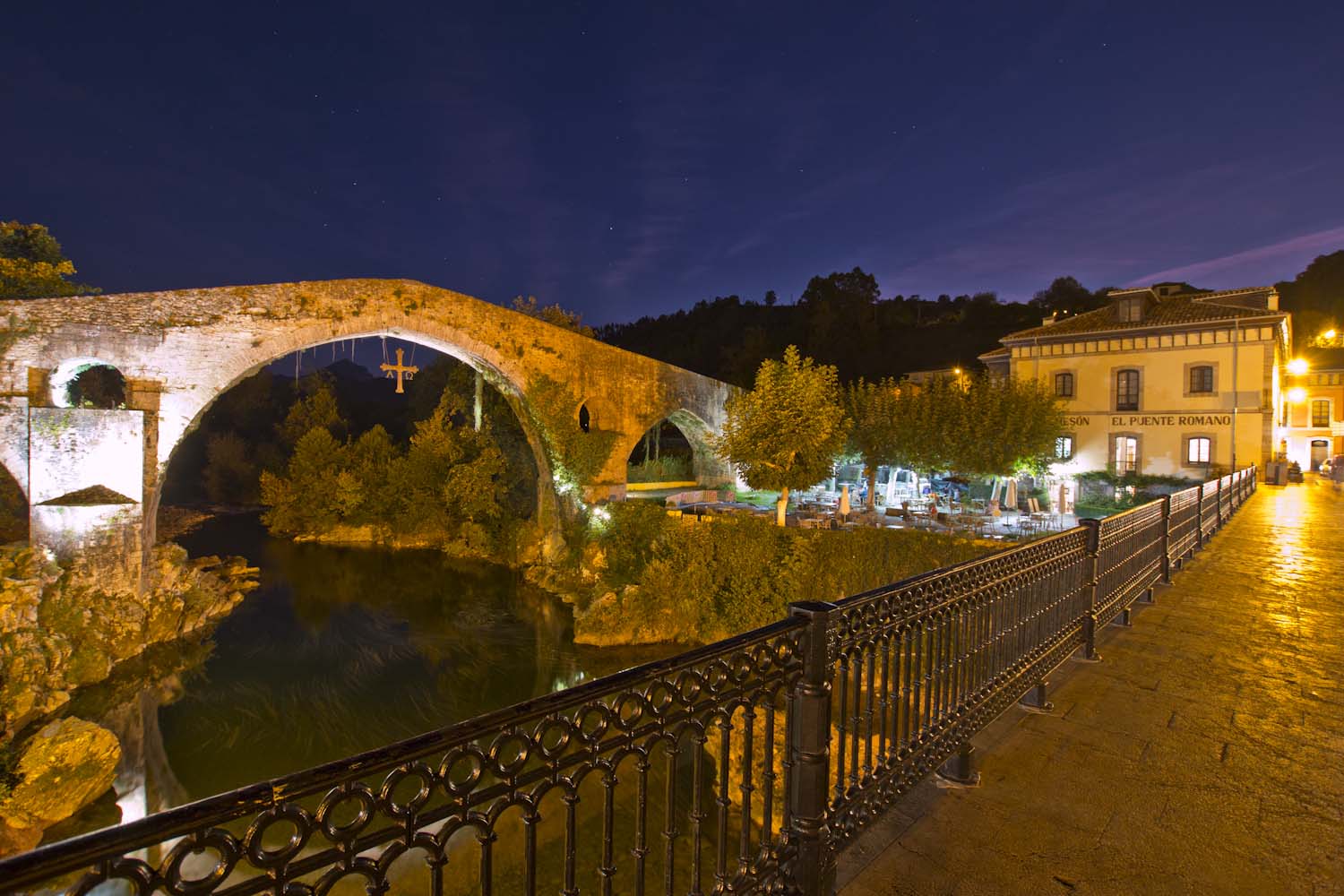
The Romans conquered the local Celtic tribes in 19 BC. The Romans liked to demonstrate their authority. One such way, was to build cobble roads. Whilst it’s believed to have been rebuilt in the middle ages, the Puente Romano (Roman Bridge) in Cangas de Onis is a highlight of the town.